Under Salt Marsh
A whole Welsh village and a purpose-built set, captured so Milk VFX could flood them on screen.
VIDEO · MODEL VIEWER TO FOLLOW
01 · Brief
Milk VFX needed to drown a real village. Under Salt Marsh, Sky Atlantic's six-part crime thriller, turns Fairbourne into the fictional Morfa Halen, cut off by a storm and going under. The live action had to carry invisible CGI seascapes, so Milk needed the whole village as a measured, textured model. They also needed the set at Dragon Studios in Cardiff, built on a concrete pad so the SFX team could flood it for real, then extended in CG. Two captures, one pipeline.
02 · Toolbox
- Trimble X9
- Leica RTC360
- Sony α7R IV
- DJI Mavic 3 Classic
- Trimble RealWorks
- Leica REGISTER 360
- Adobe Lightroom
- RealityScan
03 · On location
Fairbourne first. A tripod-mounted Trimble X9 at 308 overlapping set-ups through the streets, along the beach and over the sea wall, every scan in full colour so the cloud would lock to the photographs later. 1,342 frames from the ground and 13,700 aerial images from the drones at a range of altitudes. Set-ups registered in RealWorks; every frame balanced to a colour chart in Lightroom. Then Cardiff. The Leica RTC360 at 127 set-ups around the set, 890 frames from tripod-mounted α7R IVs and 1,800 aerial images from a Mavic 3 Classic, registered in REGISTER 360 and through the same image pipeline.
04 · Result
A first-pass model from the aerial imagery alone, so Milk could check coverage within hours of us leaving site. Then the full village from 15,350 selected inputs, scans and photographs aligned together in RealityScan, delivered as OBJ at several resolutions with UDIM textures. The set followed the same route from 3,350 inputs. Milk built the storm on top.
- OBJ mesh at multiple resolutions
- UDIM texture sets
- Registered RGB point cloud
FAIRBOURNE
LiDAR scans
terrestrial images
aerial images
inputs to the final model
DRAGON STUDIOS
LiDAR scans
terrestrial images
aerial images
inputs to the final model
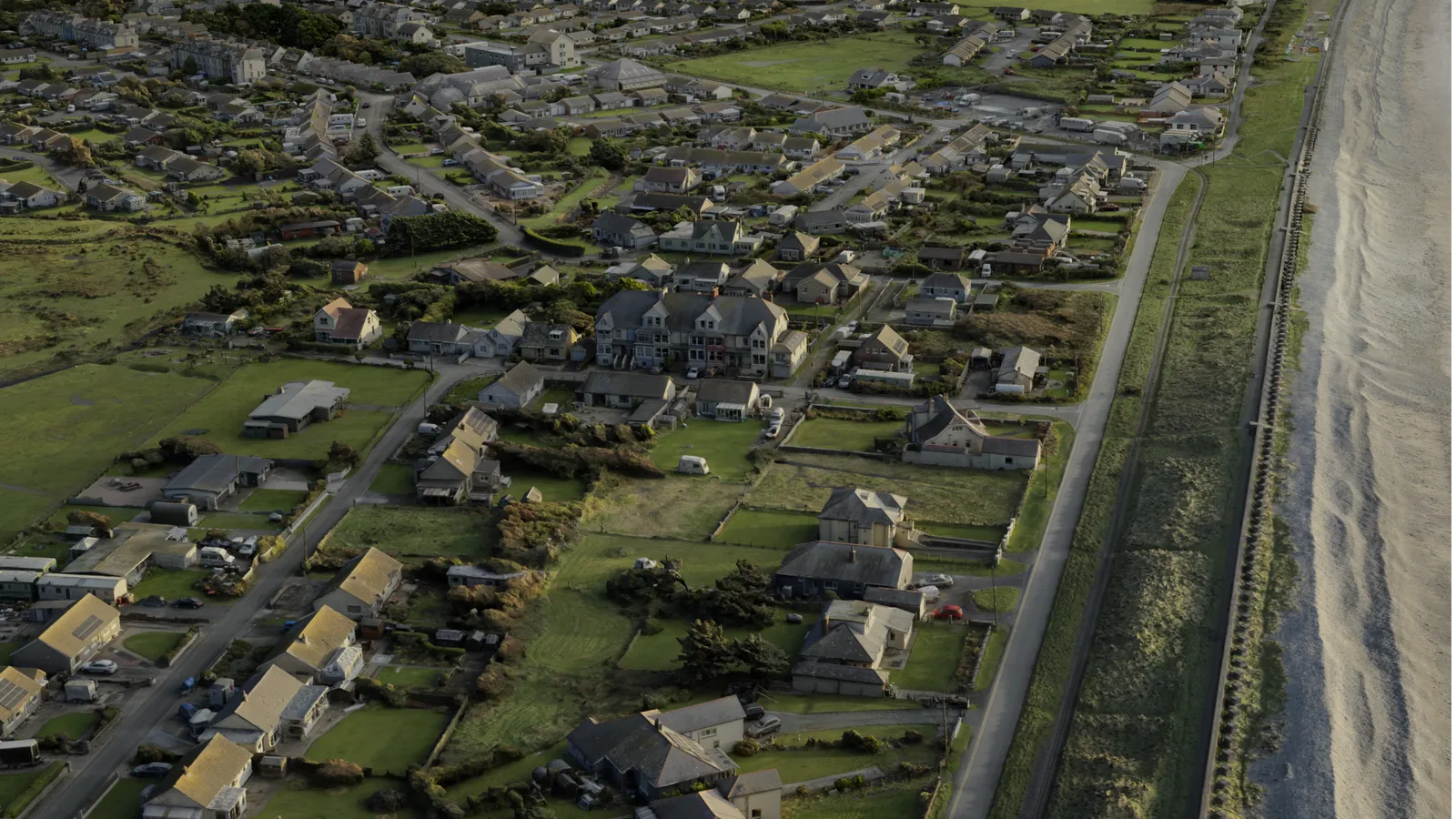
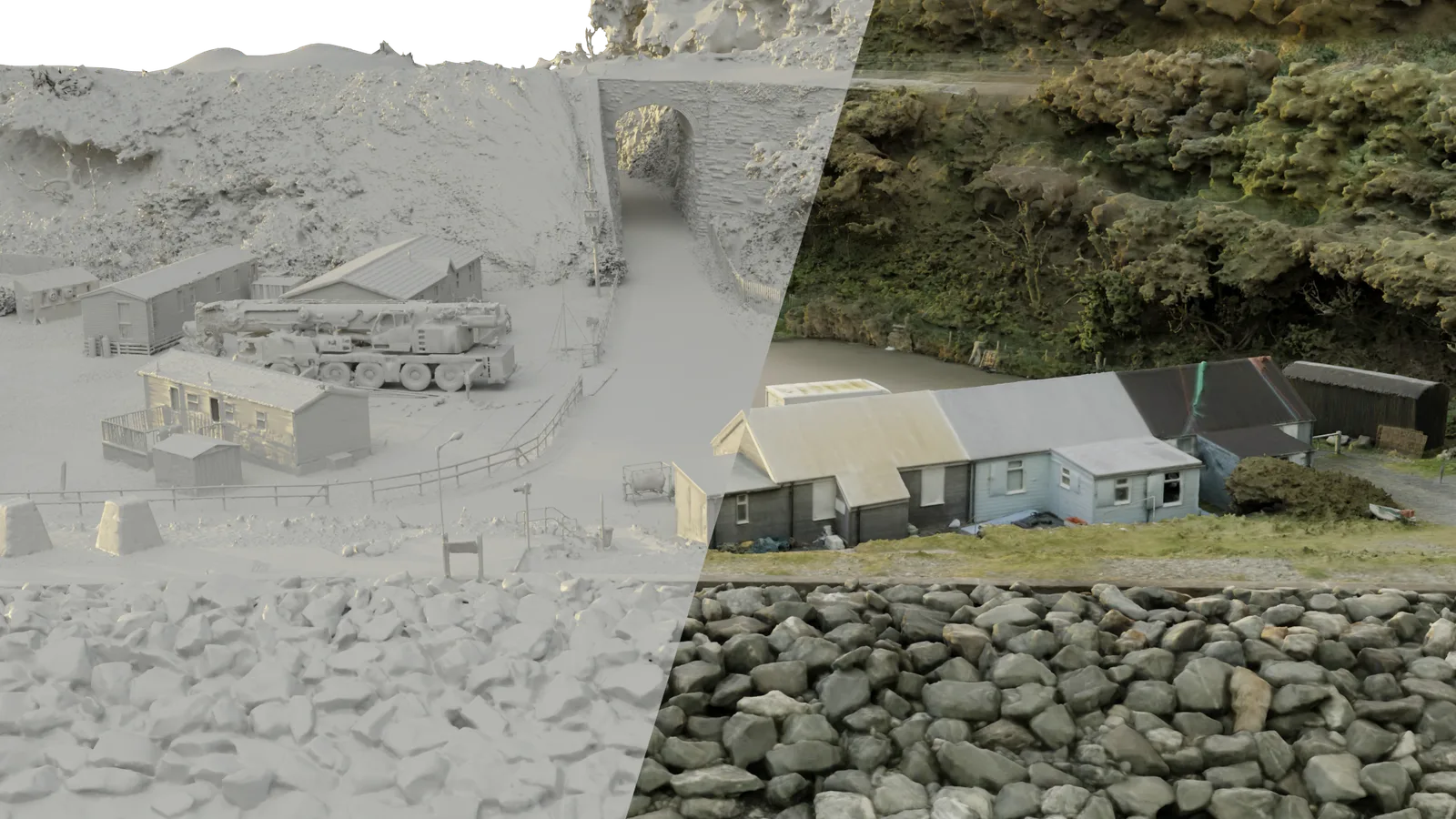
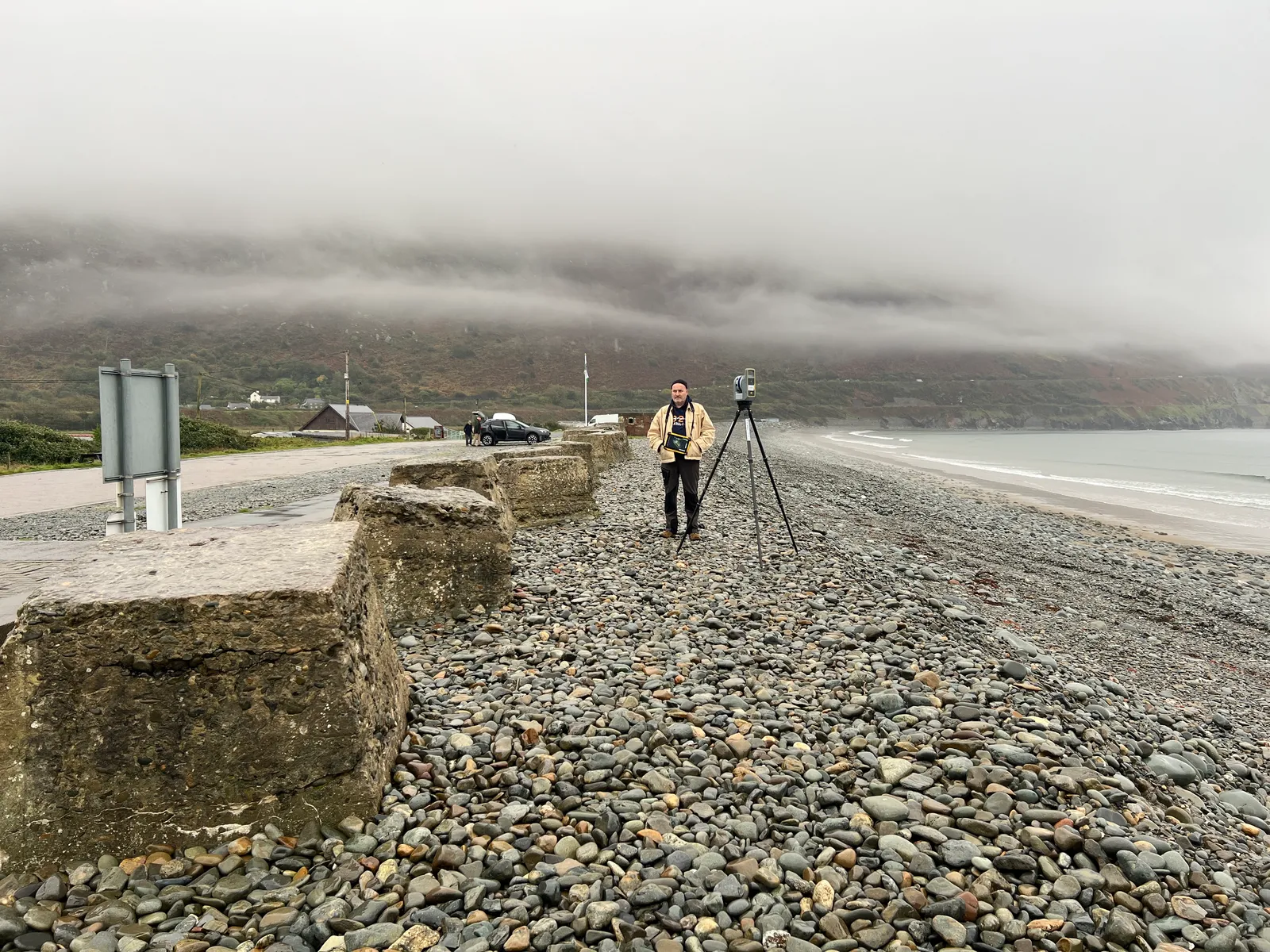
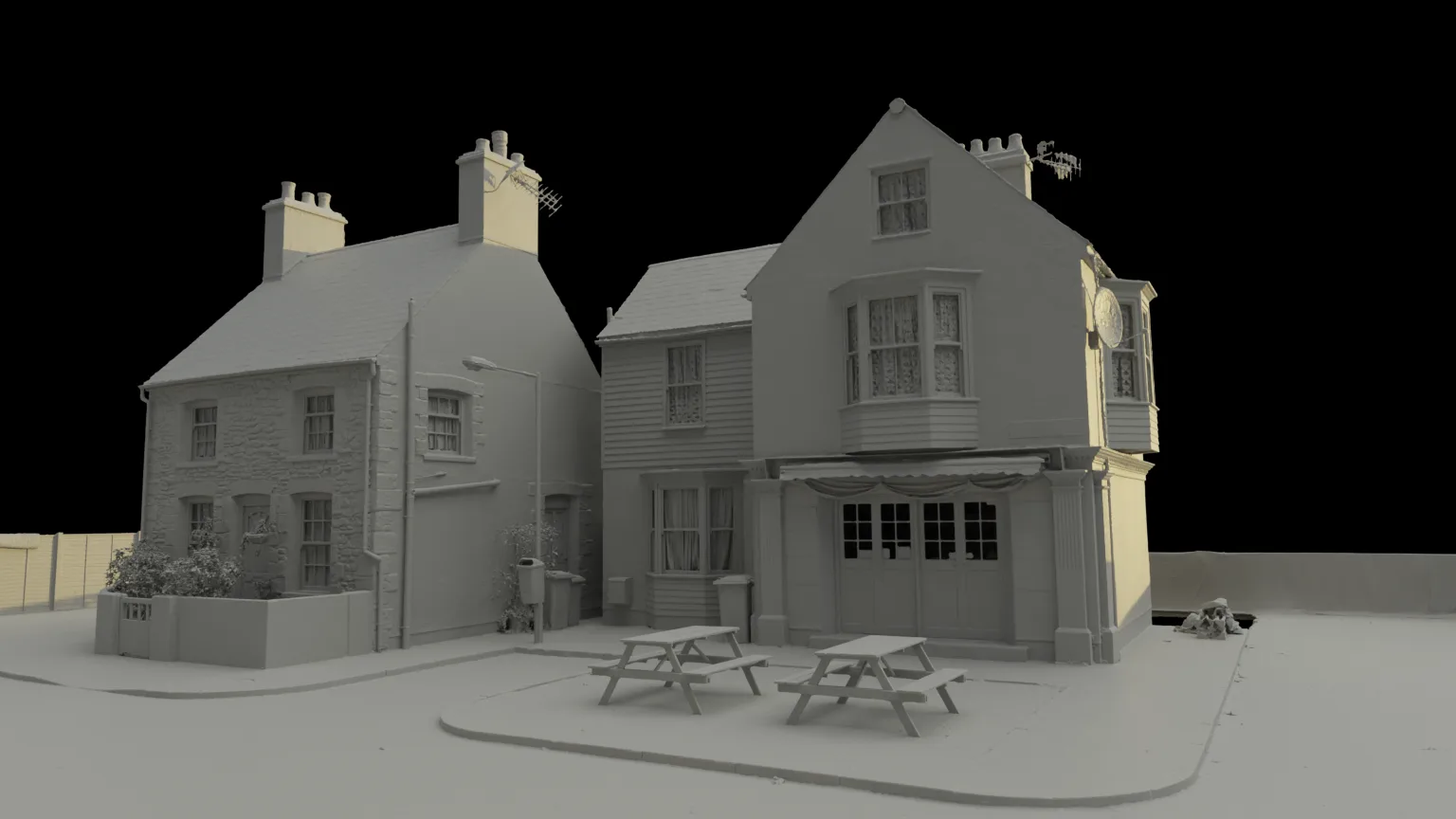
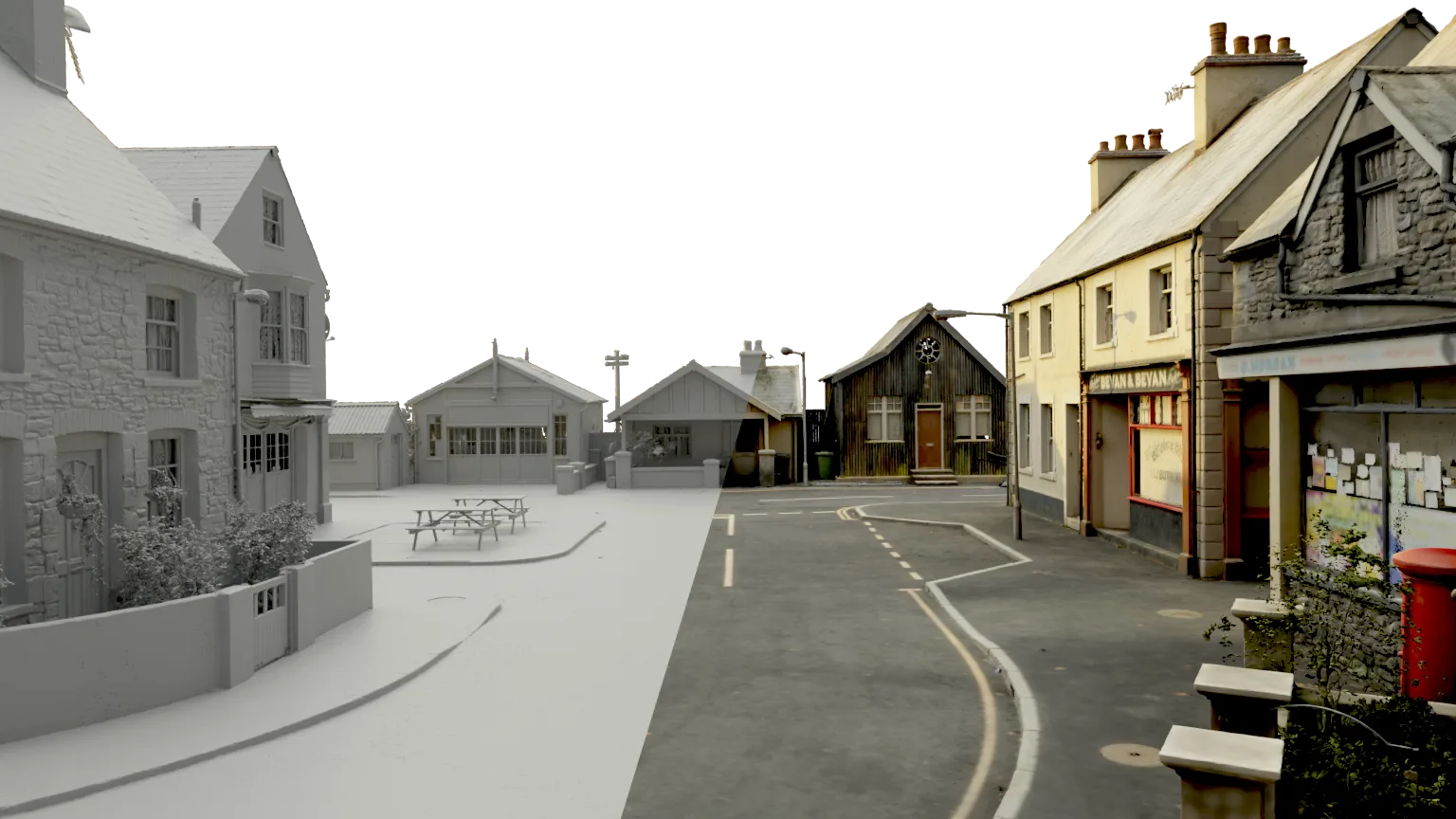
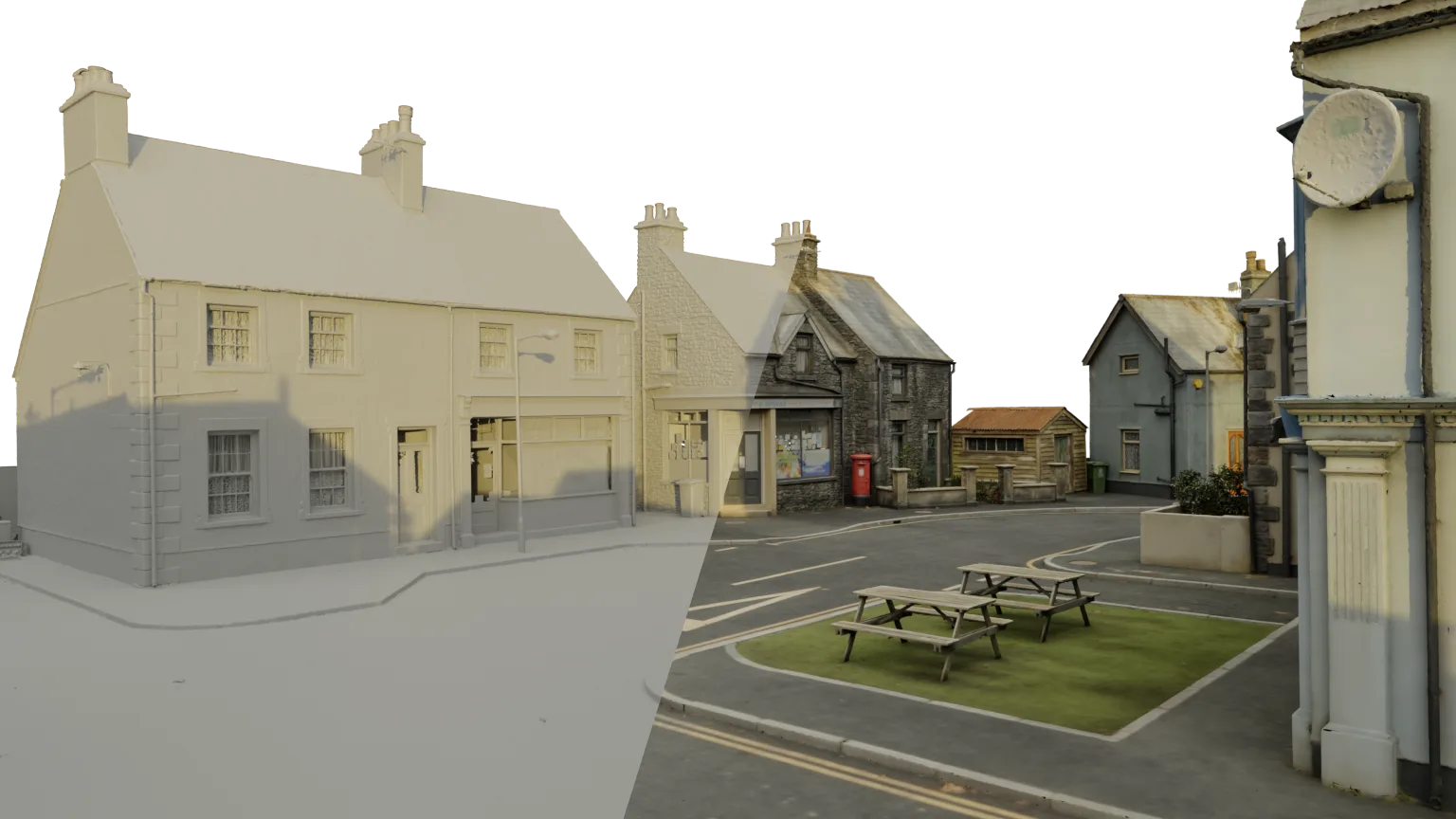
Two very different sites, one method. A village in the open, exposed to weather and tide, and a set under studio conditions built to be destroyed. Both went through the same chain: scan, photograph, register, balance, align, mesh. Both came back to Milk in formats they could drop straight into the shot.
Totals across the job: 435 scans and 17,732 images.
Next